
My Sustainable UW
A personalized recommendation tool for all things sustainability at UW-Madison.
Collaborated with other students in the student organization Design Interactive while partnering with the UW-Madison Office of Sustainability to design an app that helps students personalize their campus sustainability journey. Conducted user research through interviews and usability testing to improve engagement. Created several low and high-fidelity prototypes in Figma to ensure usability. Presented the final project to the Office of Sustainability at the end of the Fall 2024 semester.
Year: 2024
Role: UX Designer
Problem
Users struggle to navigate the Office of Sustainability’s website due to overwhelming information and lack of personalized guidance, limiting engagement with resources and initiatives.
Consequences of Problem
Missed opportunities to engage with sustainability initiatives
Frustration with navigating the website to find specific information
Reduced accessibility for students who might otherwise get involved
Solution
Design a tool for personalized campus sustainability experience.
Information Flows
-
Information Flows -
Storyboarding
Our goal was to answer the following questions to guide our approach:
How students would use and benefit from this tool?
What key information could this quiz give them to aid in their sustainability journey on campus?
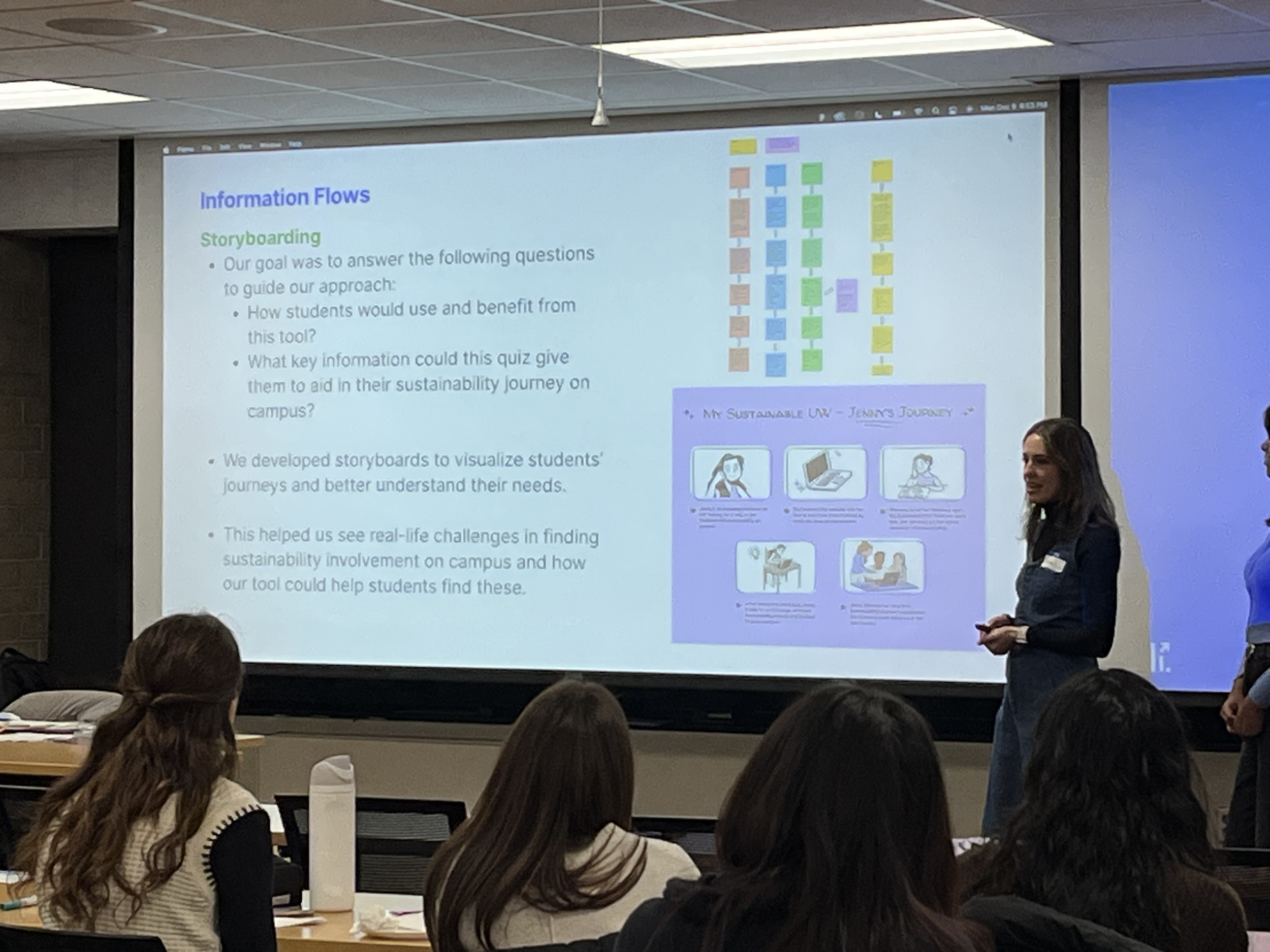
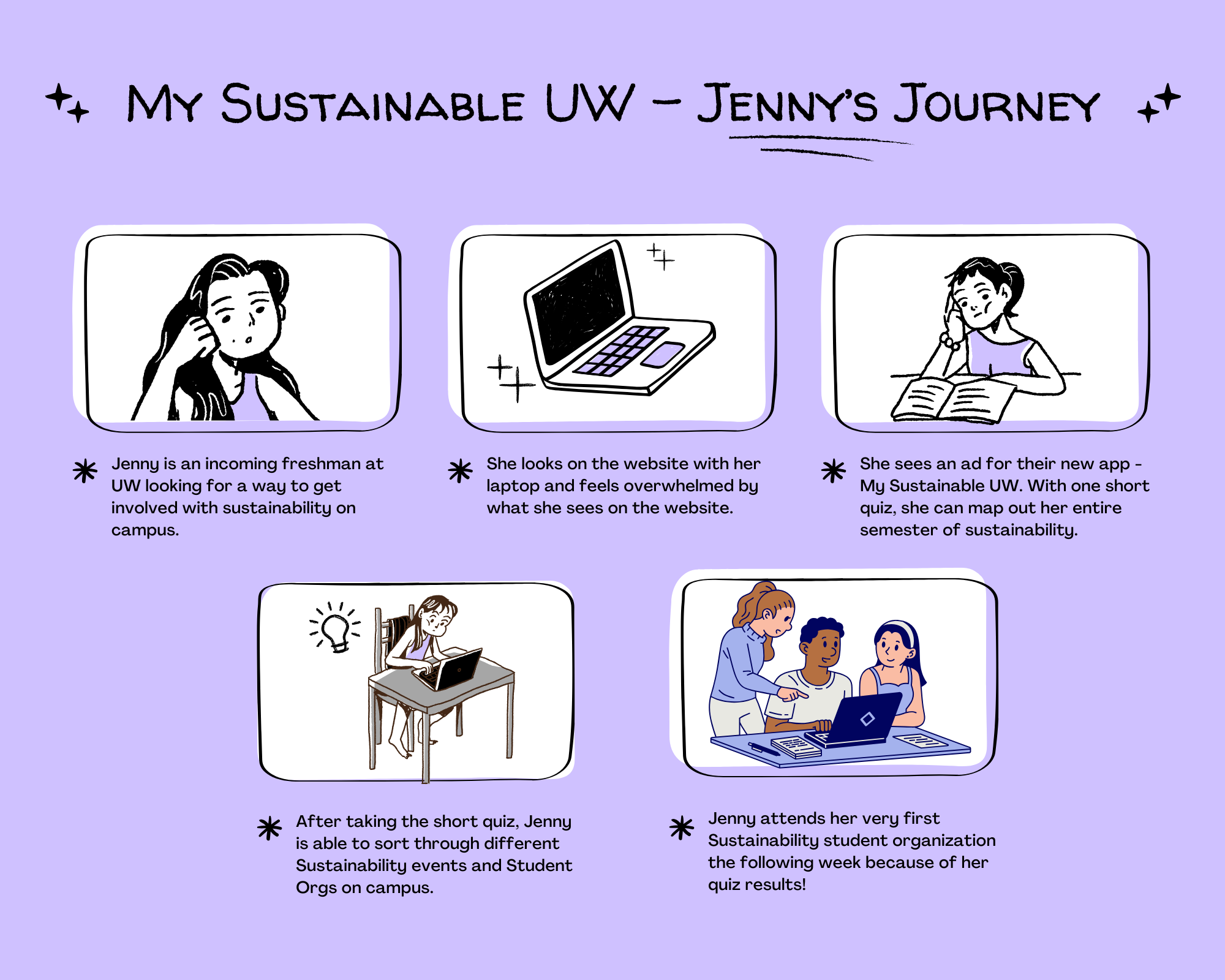
We developed storyboards to visualize students’ journeys and better understand their needs.
This helped us see real-life challenges in finding sustainability involvement on campus and how our tool could help students find these.
Question Flows

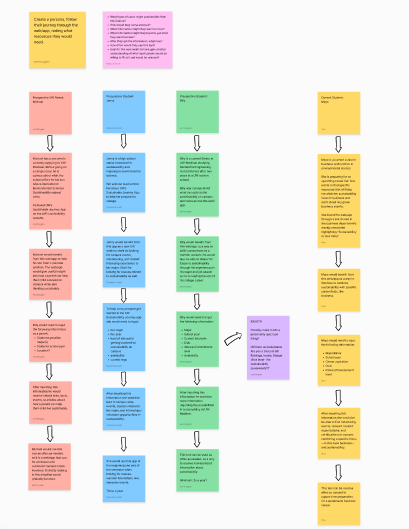
Question Flows
Developed question flows that were key to making the tool interactive and personalized.
Covered students majors, level of understanding of sustainability, and their interest level in being involved with different aspects of it on campus.
Students would be guided to resources and activities that matched their goals, supporting them in exploring and engaging with campus life.
Low Fidelity
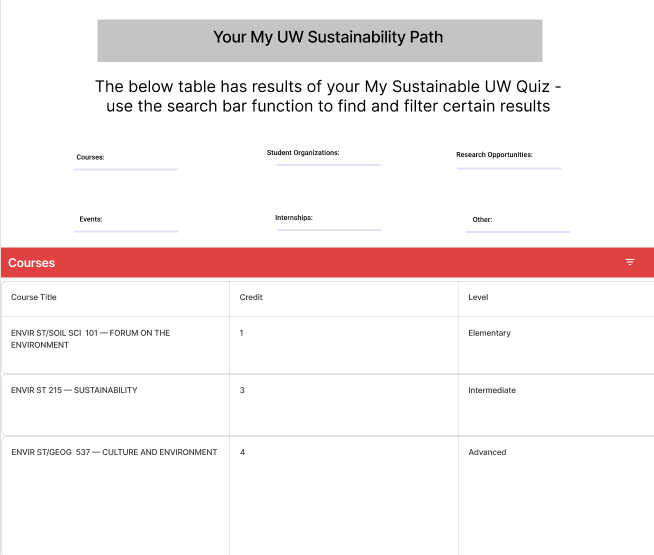
Option 1: Filtered recommendations
Filtered Recommendations modeled after UW Madison's course catalog search feature
Designed to align with existing functionality for a seamless user experience
Users can enter keywords to filter through recommendations
Matching recommendations are highlighted for easy identification
Helps streamline the search process, making it more intuitive and efficient
Low Fidelity

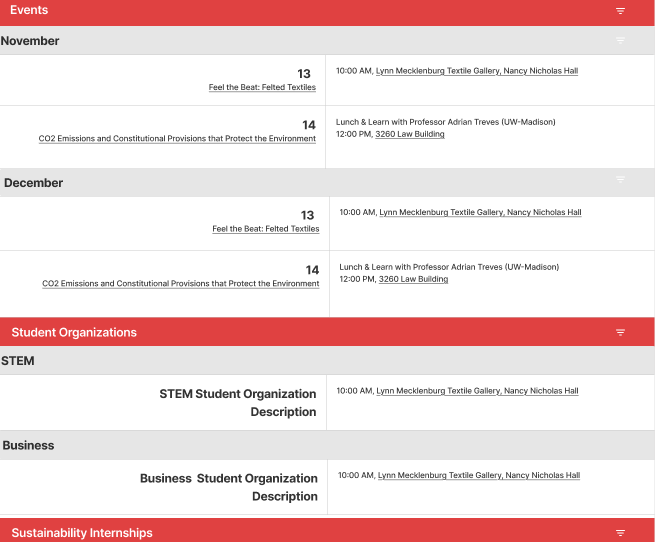
Option 2: Summarized Recommendations
Gives out bite sized information for the recommendations
Combined summarized results page and filtering tool for streamlined delivery of information
Interactive, bite-sized recommendations on the summary page, with detailed options available on a separate page
Added "Graduate Student" as an option for personalization

High Fidelity
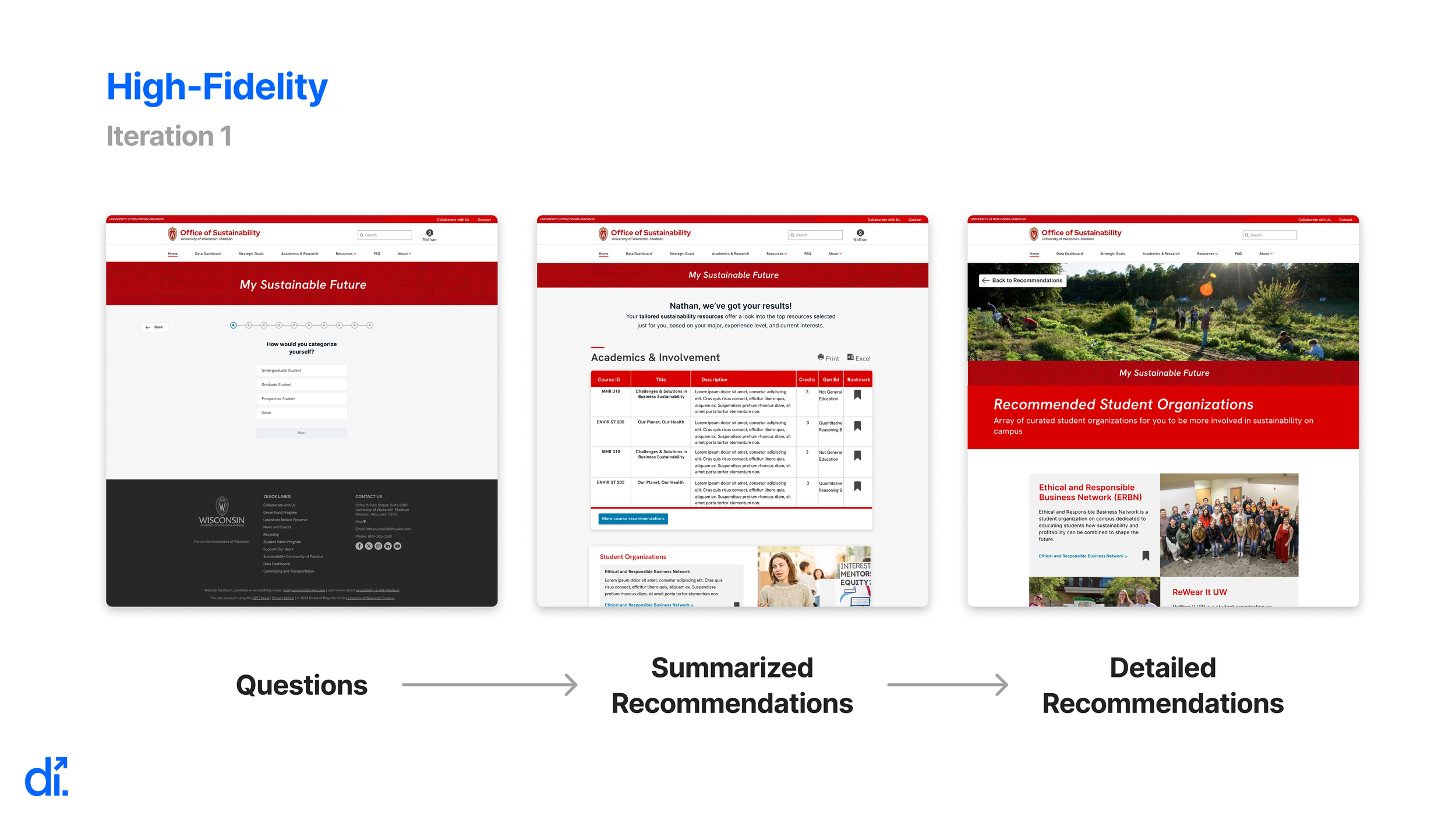
Iteration 1
Revised categories to provide more personalized and valuable user information.
Categories of Personalization:
Academics & Involvement: Courses, Student Organizations
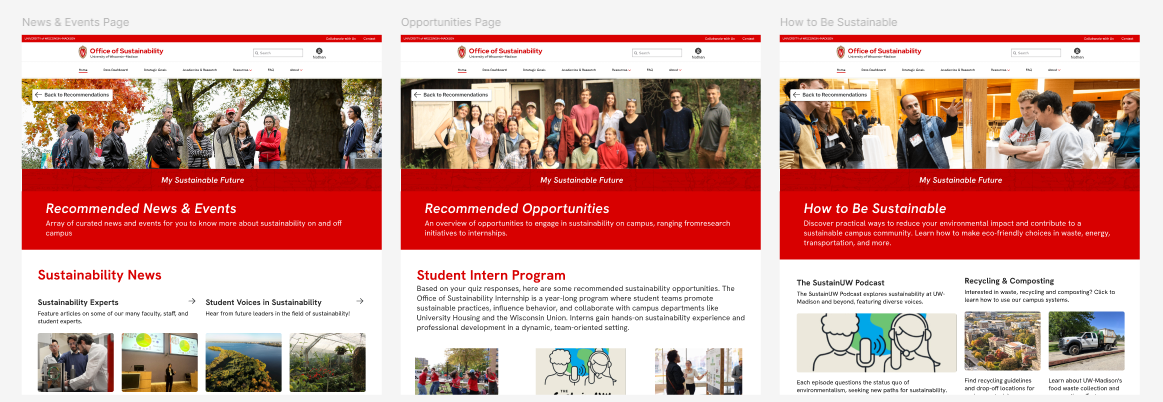
News & Events
Opportunities & More Resources: Internships, Research, How to Be Sustainable
General Resources
This slide from our Design Interactive presentation, highlights the My Sustainable Future design in a mobile app version and how it optimizes navigation for users.

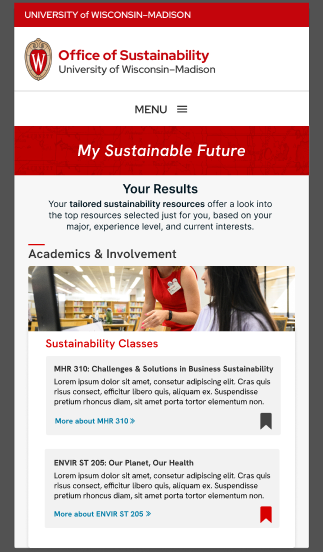
Example of how the results page would look in the mobile version of the app. Gives users the options to save options and come back for it later.

The Academics and Involvement displays different classes and student organizations that match up with this user’s sustainability interests.
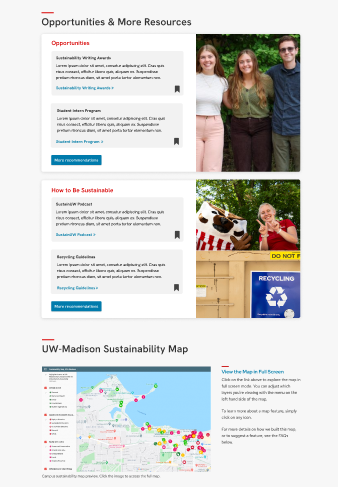
Opportunities and Resources page with an interactive map showing different sustainable practices across UWs’s campus!
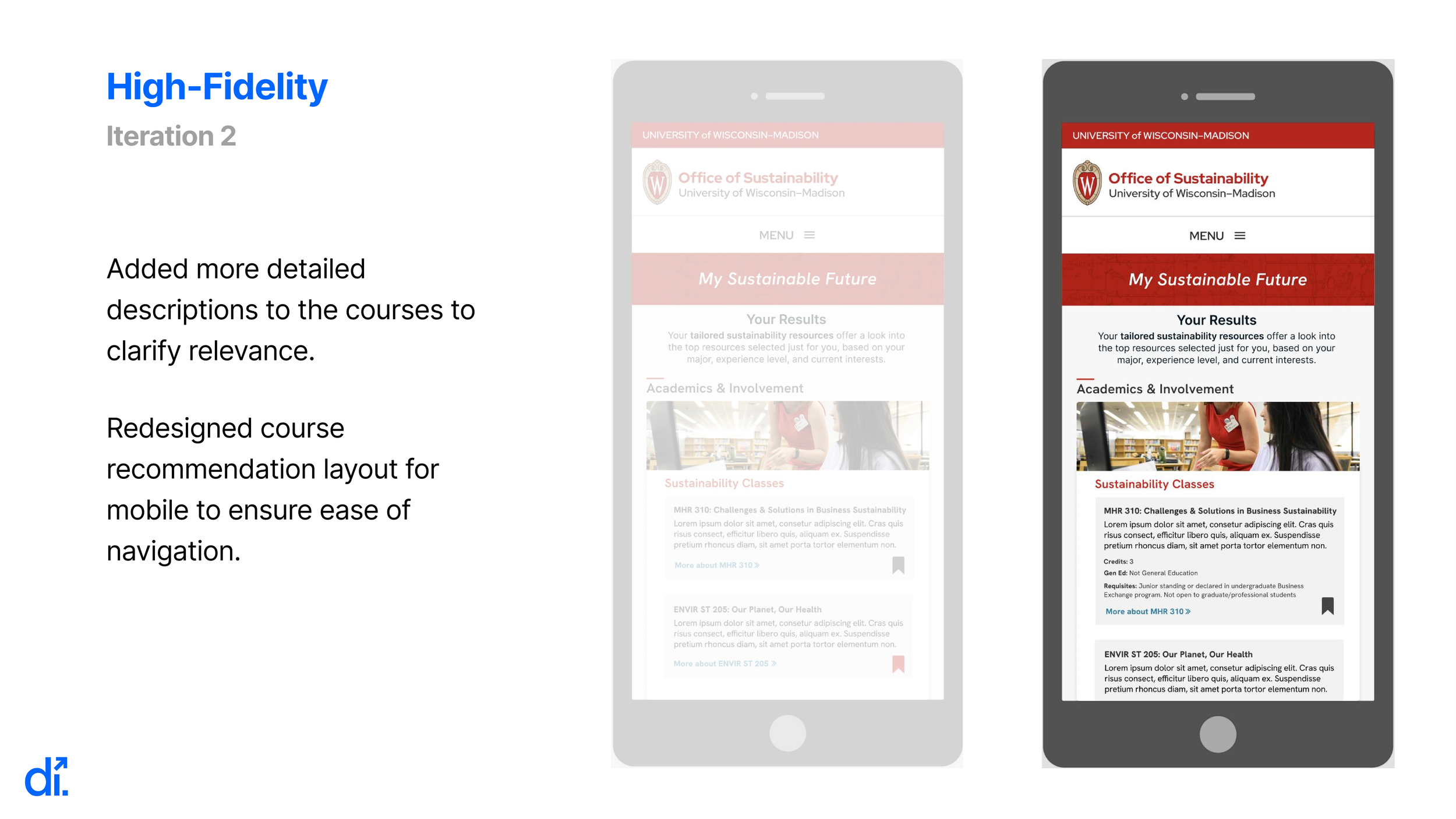
Iteration 2
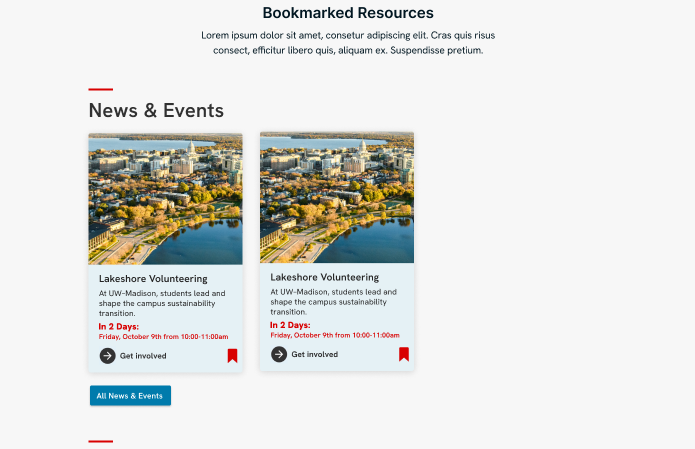
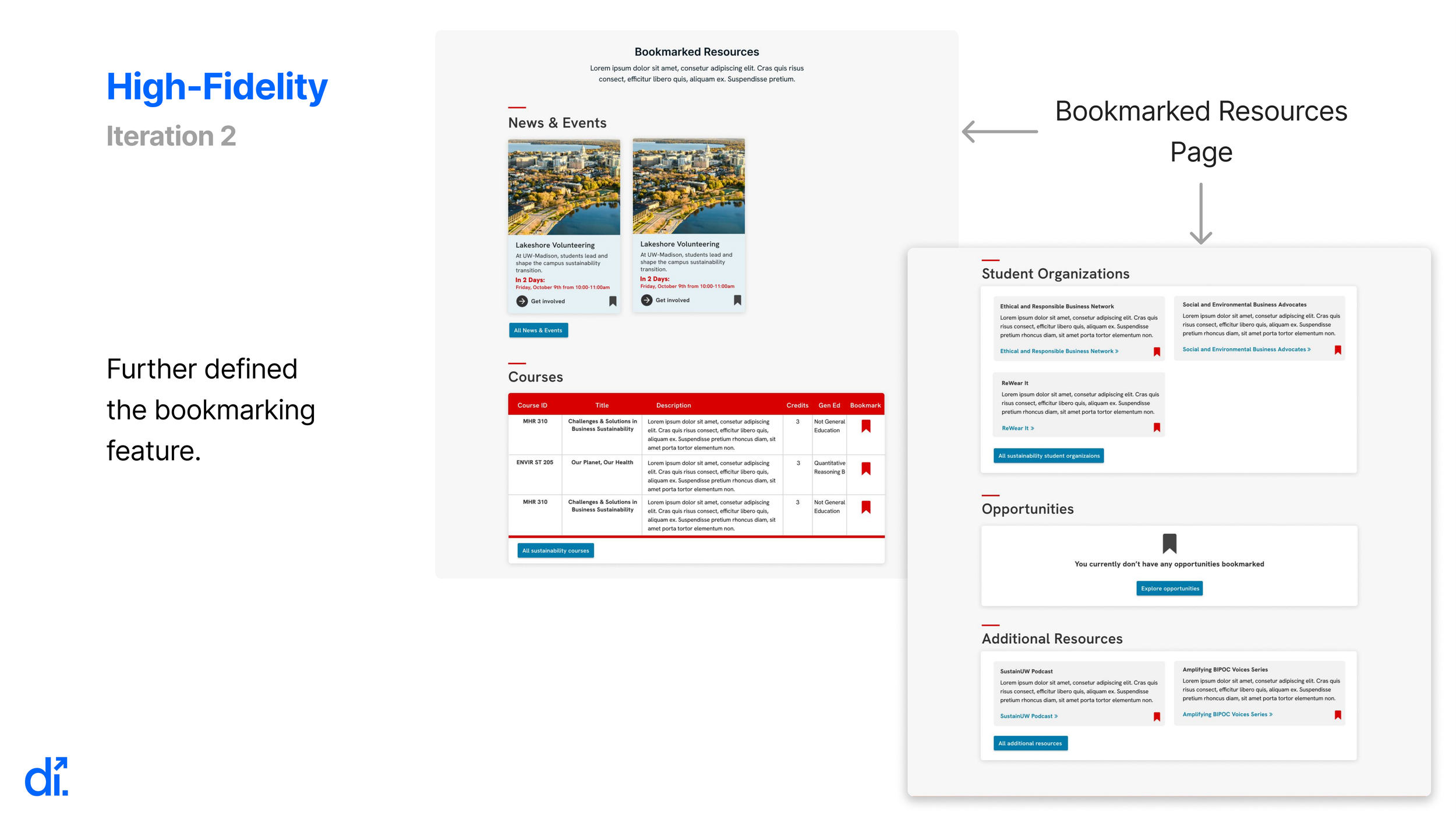
Revisions to the results page were made based off of the Office of Sustainability’s feedback, we added a Bookmarked Resources section for users to save certain results to one section of the app. Additionally, the mobile version had detailed course descriptions added.
Lessons Learned
Working on My Sustainable Future taught me how much sustainability initiatives benefit from personalization and clear design, especially in an information-dense environment like a university campus. Being part of the first round of Design Interactive projects made it especially exciting, and the photo to the right is from our presentation with the Office of Sustainability present.
Through interviews, usability testing, and multiple Figma prototypes, I strengthened my design process and learned project management styles I still use in group work as a UX designer. The project showed me how continuous iteration, empathy, and collaboration help make sustainable actions easier to understand and follow, which increases the chances that users engage meaningfully with campus sustainability efforts.